Design is more than just aesthetics; it's about how spaces make people feel. Every texture, sound, color, and light affects how our brains process and experience an environment. For neurodivergent individuals such as those with autism, ADHD, dyslexia, or sensory sensitivities these design elements can either create comfort and focus or cause stress and overload.
NeuroInclusive design embraces the diversity of human perception. It recognizes that there’s no “one-size-fits-all” environment and instead aims to create spaces that are adaptable, calming, and empowering for everyone.
These five psychologies of design explore how sensory balance, spatial clarity, choice, emotional safety, and connection to nature can shape truly inclusive environments where every mind can feel comfortable, engaged, and at ease.
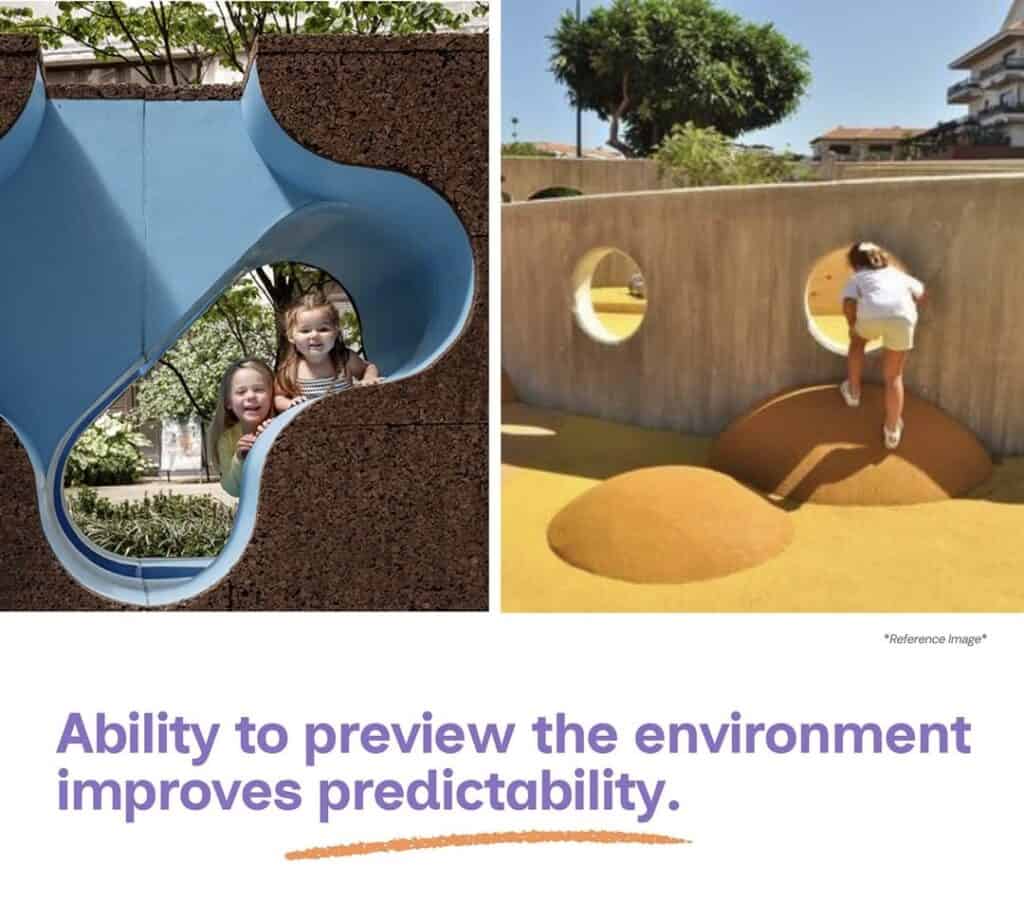
Many neurodivergent individuals, particularly those with autism and anxiety disorders, benefit from predictability and routine. Novel or unexpected environments can trigger anxiety due to difficulty processing new sensory information and social cues simultaneously. Previewing allows the brain to create a mental model of the space, reducing the cognitive load and the feeling of being overwhelmed upon entry.
Providing previews aids in the formation of more accurate and detailed cognitive maps before physical entry, increasing feelings of control and reducing environmental uncertainty, a known source of stress.
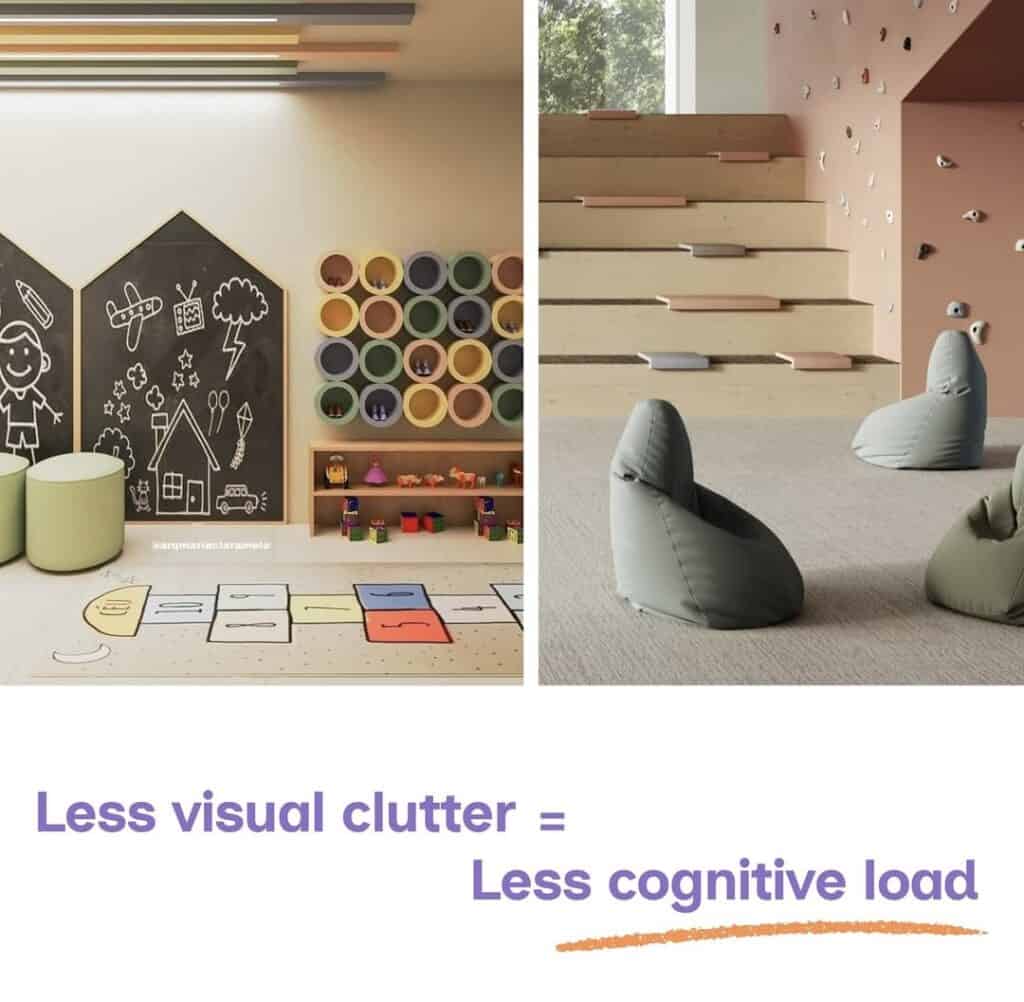
The human brain has limited attentional capacity. When overloaded with visual input, the visual cortex and prefrontal cortex are taxed, especially in individuals with ADHD or sensory processing sensitivities. This reduces the ability to filter distractions and focus on relevant stimuli.
Minimize unnecessary visual stimuli such as excessive patterns, random bright contrasts, and disorganized layouts. Instead, opt for clean lines, consistent color schemes, and generous use of negative space.
The hippocampus and entorhinal cortex are key brain areas involved in spatial navigation and memory. Studies show that recognizable visual patterns and distinct shapes support cognitive mapping and episodic recall, especially in people with memory retention challenges, including dementia and certain neurodivergent conditions like ADHD or autism. Incorporate distinctive, repetitive, and playful geometric forms, such as bold circles, spirals, or animal-like structures into spatial design to act as visual anchors and cognitive markers.

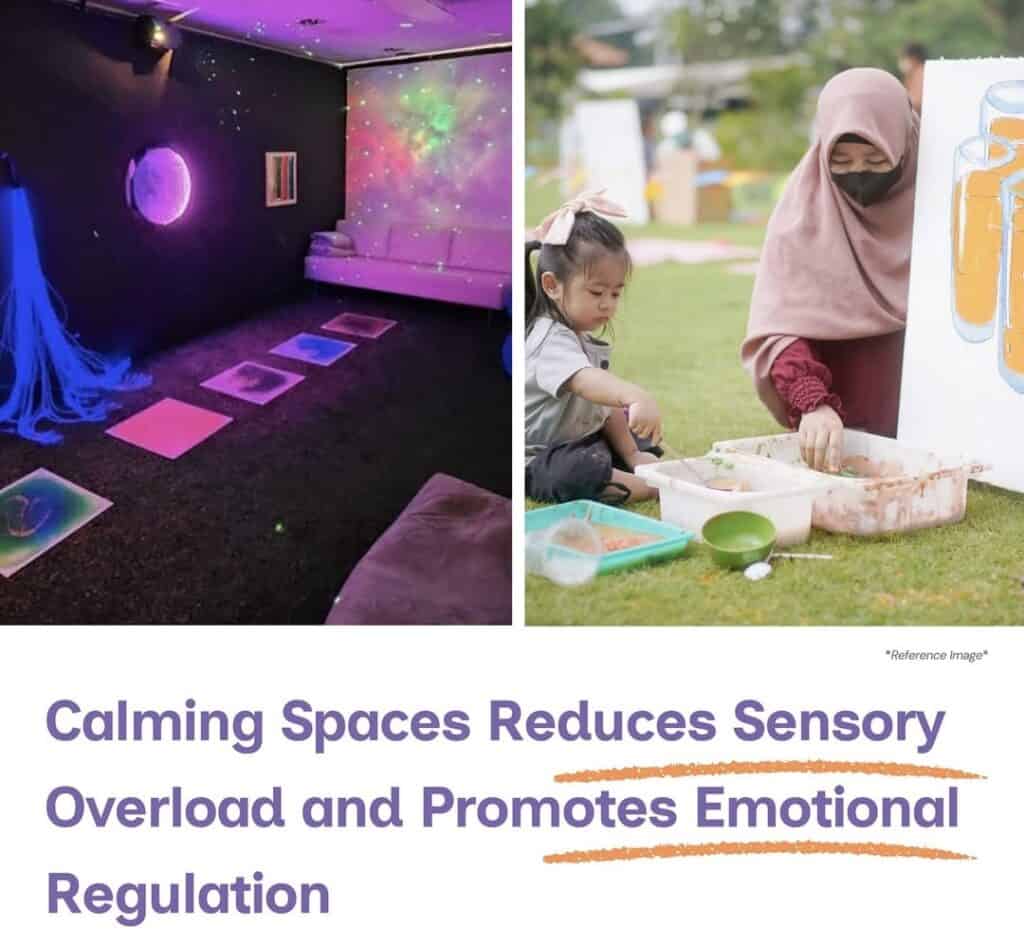
Quiet and nature-based spaces help calm the brain by reducing sensory input and lowering amygdala activity key for emotional regulation in neurodivergent individuals.
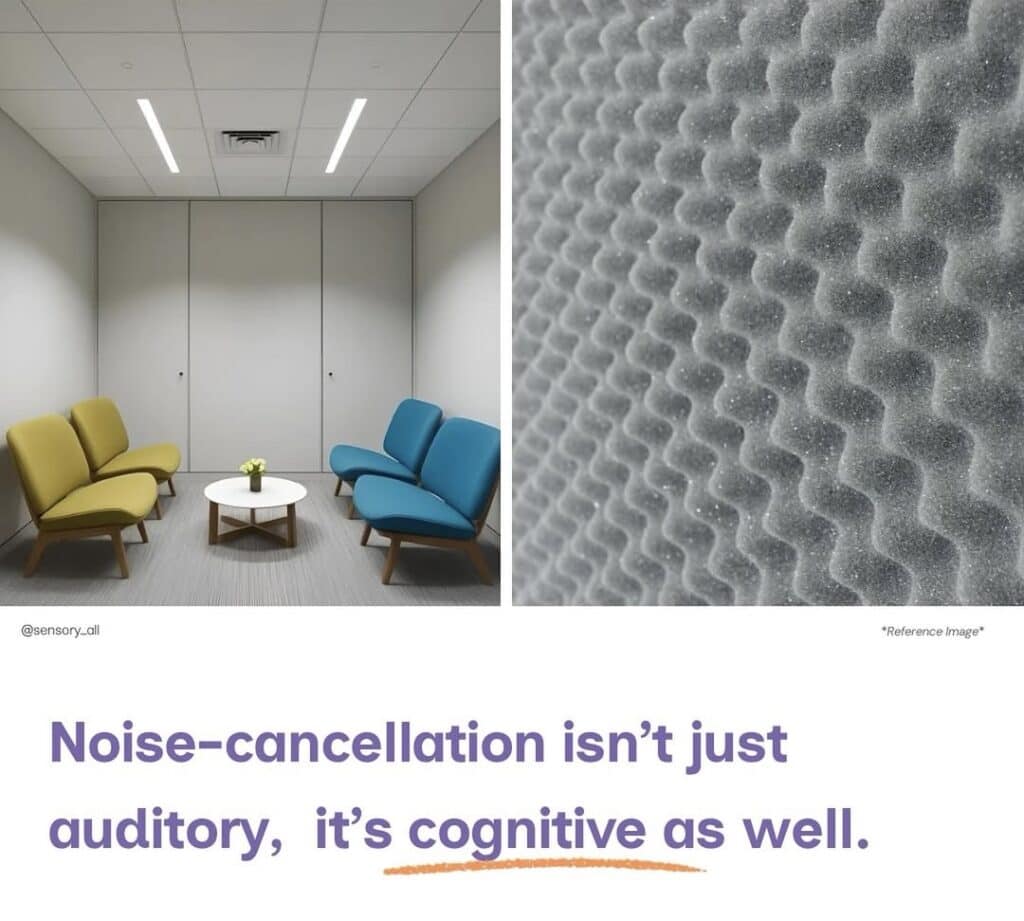
Designated quiet zones or retreat areas with low lighting, acoustic control, soft textures, and minimal sensory input help neurodivergent individuals regulate emotions and recover from sensory overload. Adding biophilic elements, such as plants, nature-inspired patterns, water features, or natural lighting can enhance emotional well-being and reduce stress.
Neurodivergent brains often process sound differently due to atypical thalamic filtering, making them more sensitive to noise. Sudden sounds or background hums can trigger the amygdala, leading to fight-or-flight, sensory fatigue, and emotional dysregulation. Designing low-stimulation spaces (~under 50 dB) supports cognitive clarity and emotional well-being—for everyone.
Neurodivergent brains often process sound differently due to atypical thalamic filtering, making them more sensitive to noise. Sudden sounds or background hums can trigger the amygdala, leading to fight-or-flight, sensory fatigue, and emotional dysregulation. Designing low-stimulation spaces (~under 50 dB) supports cognitive clarity and emotional well-being—for everyone.
NeuroInclusive design is not a niche concept. It is a fundamental shift in how we understand human experience within space. When we design with predictability, clarity, recognizable cues, emotional safety, and acoustic balance in mind, we are not just reducing discomfort; we are expanding participation. These five psychologies remind us that environments shape behavior, focus, memory, and regulation at a neurological level. By intentionally creating adaptable, calming, and choice-driven spaces, we move from designing for the “average” user to designing for the full spectrum of human minds. And in doing so, we build environments where everyone can truly belong, engage, and thrive.